
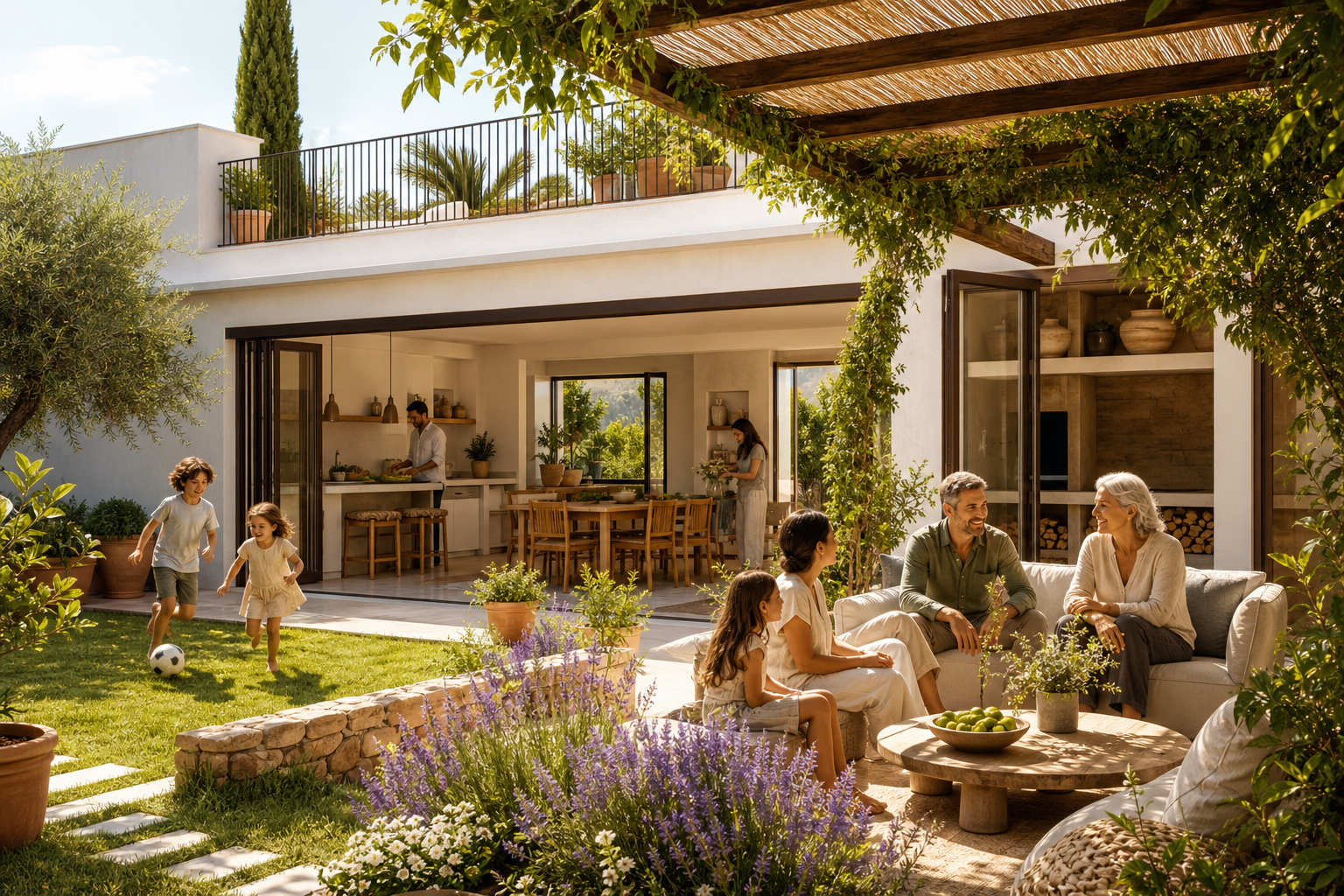
How to Choose a Home That Supports Family Life in Spain
Finding a home in Spain that suits family life involves more than counting bedrooms or comparing floor areas. The right property should support the way your household actually lives, whether that means relaxed outdoor meals, quiet working spaces, visiting relatives, children’s changing needs or a simpler daily routine.
Instead of focusing only on appearance, it can be helpful to consider how a home will function during an ordinary week. A beautiful property may not feel practical if there is nowhere to store school bags, no comfortable place for adults to work or insufficient privacy when guests stay. A family-friendly home should make everyday life easier rather than create a long list of compromises.
Start with your family’s real daily rhythm
Before viewing properties, write down what a normal weekday and weekend look like. Think about where everyone wakes up, eats, studies, works, relaxes and keeps personal belongings. This simple exercise can reveal which features matter most.
For example, a family with young children may value an easily supervised outdoor area and bedrooms located close together. Teenagers may need more independence and a quiet place to study. Families with older relatives may prefer a bedroom and bathroom on the main living level, while households working remotely may need two separate work areas rather than one shared desk.
It is also worth considering how your needs may change. Children grow, relatives may visit for longer periods and hobbies can require additional storage. A flexible home often remains useful for longer than one designed around a single stage of family life.
Look for flexible spaces rather than unused rooms
A spare bedroom can be valuable, but flexibility is not limited to the number of rooms. A bright landing, wide hallway or second reception area might become a reading corner, homework zone or occasional office. Open-plan living can be sociable, but families should also check whether there is at least one quieter area for concentration or rest.
When viewing a property, imagine several possible uses for each room. Could a dining area accommodate crafts or homework? Could a guest bedroom also serve as an office? Is there enough wall space for shelving, and can furniture be rearranged without blocking doors or circulation routes?
These questions are especially important when buying a home that you hope to enjoy for many years. A flexible layout can help the property adapt without requiring immediate building work.
Give outdoor space the attention it deserves
Outdoor living is often an important part of enjoying a home in Spain. A terrace, balcony, patio or garden can extend the usable living space, but its value depends on how practical it is for your household.
Consider whether the outdoor area offers enough room for comfortable seating, dining, play or gardening. Check how easy it is to reach from the kitchen and living areas, and think about privacy from neighbouring properties. Families may also want to assess surfaces, steps, railings and shaded areas from a practical perspective.
A manageable outdoor space is usually more useful than a larger area that requires constant maintenance. Ask yourself who will look after it, how often it is likely to be used and whether it can serve different purposes throughout the year.
If you are beginning your search, the PlotsAndVillasJavea.com home page can be a useful place to start exploring the agency’s website and property focus.
Plan for storage from the beginning
Storage has a major influence on how calm and organised a family home feels. Look beyond fitted wardrobes and consider where bicycles, sports equipment, beach items, cleaning supplies, luggage and seasonal clothing will be kept.
Useful storage does not always need to be large. A properly positioned cupboard near the entrance can prevent shoes and bags from spreading through the house. A utility area can keep laundry equipment and household supplies separate from living spaces. A secure external store may be particularly useful for outdoor furniture, tools or children’s equipment.
During a viewing, open cupboards and measure key areas if possible. Check whether wardrobes have usable depth and whether kitchen storage is sufficient for the way your family cooks. Storage that is difficult to access often becomes storage that is rarely used.
Balance togetherness with privacy
Family life involves shared time, but everyone also benefits from having somewhere to retreat. This does not necessarily mean a large house. It may be enough to have bedrooms separated from the main entertaining area, a small reading nook or doors that can close between living zones.
Think about sound as well as visibility. A property may look spacious, yet noise can travel easily between floors or adjoining rooms. If possible, visit at different times and listen for traffic, nearby activity or sounds from neighbouring homes. This is general practical guidance rather than a substitute for professional property inspections.
Privacy can also matter when friends or relatives visit. A guest room with convenient access to a bathroom can make visitors feel comfortable without disrupting the household’s normal routine.
Consider accessibility and everyday convenience
Even if your family has no immediate accessibility concerns, a home that is easy to move around can be more comfortable over time. Fewer unnecessary steps, sensible bathroom layouts and a practical entrance can help with shopping, pushchairs, injuries or visiting relatives.
Pay attention to the route from parking or the street to the front door, the position of stairs and the ease of carrying groceries. Small details can have a large impact on daily life, particularly when the home is occupied by several generations.
Make the decision as a family
Each member of the household may notice different strengths and weaknesses. Children may focus on outdoor space, teenagers on privacy and adults on maintenance or commuting routines. Bringing these perspectives together can help create a clearer list of priorities.
Separate essential requirements from desirable features. An essential requirement might be a suitable bedroom arrangement, while a desirable feature could be a particular decorative style. This distinction makes it easier to compare properties objectively and avoid overlooking a practical home because of minor cosmetic details.
For property-related questions or to discuss your search, you can contact PlotsAndVillasJavea.com. Any property purchase should be assessed according to your own circumstances, with appropriate independent legal, tax, technical and financial advice where needed.
Choose the home that supports the life you want
The best family home in Spain is not necessarily the largest or most impressive property. It is the one that supports comfortable routines, gives everyone enough space, makes outdoor living enjoyable and remains adaptable as the household changes.
By viewing properties through the lens of daily family life, you can make a more informed decision. Focus on how the home works, not only how it looks, and consider the practical details that will still matter long after the initial excitement of finding a property.